

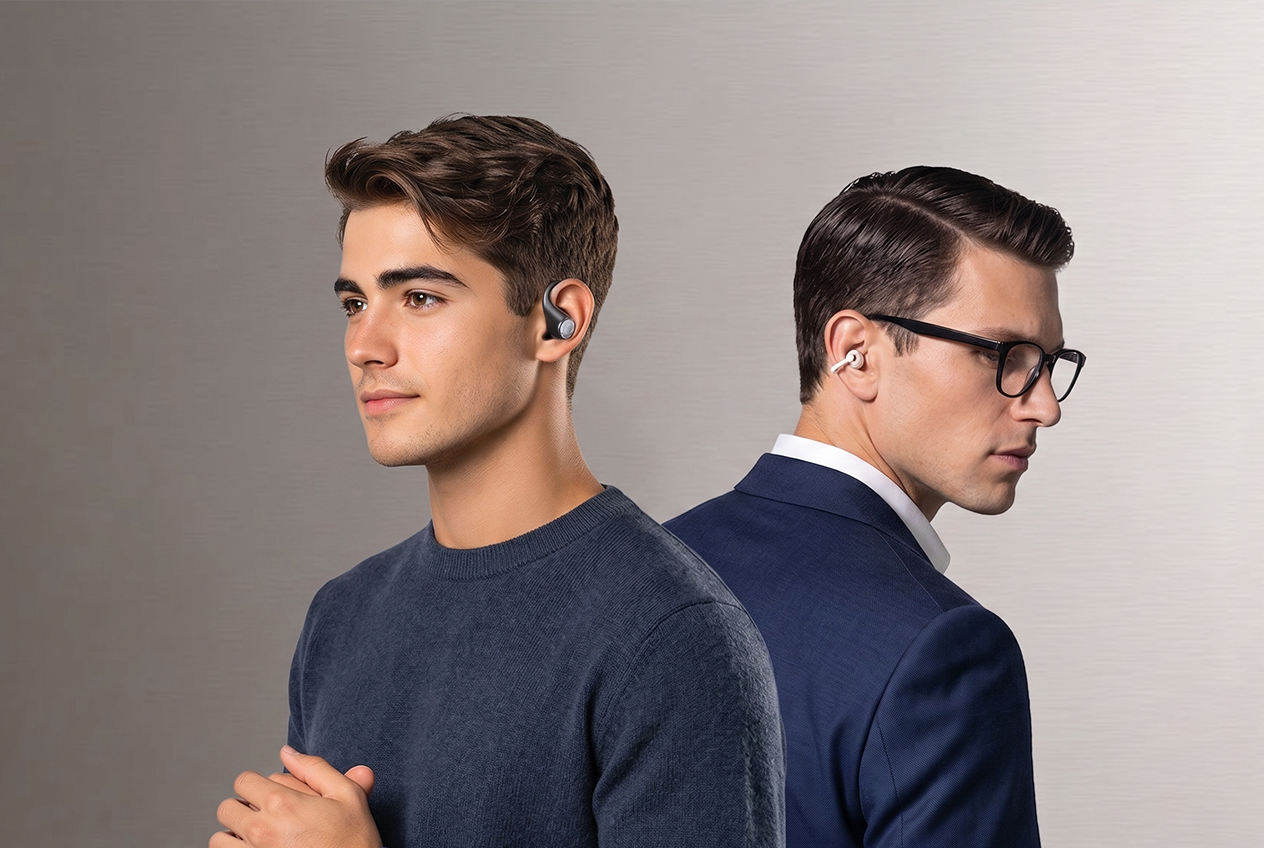
Turned up your open-ear earbuds to max and still felt like something was missing? Before you start hunting for a return label, it's worth knowing this isn't a defect. It's physics, and it's fixable in about five minutes without spending another dollar.
The trade you already made (whether you realized it or not)
Every open-ear earbud is built around a compromise: it gives up the sealed chamber that traditional earbuds use to trap sound against your eardrum, in exchange for letting you hear the world around you. That seal is exactly what makes sealed earbuds feel louder and bassier — low-frequency waves need a closed space to build up pressure near the eardrum. Take the seal away, and a portion of that same bass simply radiates out into the air around your head instead of into it.
So no, your open-ear earbuds don't have "weaker" hardware than the sealed pair you're used to. They're just doing what open-ear was designed to do, which sometimes means the punch you're chasing takes a little more setup to find.
Five-minute fixes, roughly in order of effort
Nudge the position first. This is the one most people skip, and it's usually the biggest lever. Open-ear speakers have to aim sound at your ear canal from a distance, so a few millimeters up, down, forward, or back can be the difference between "thin" and "full." Before touching a single setting, spend thirty seconds just repositioning.
Open the EarFun Audio app and actually use the EQ. This is where most of the recoverable bass lives. A few places to look:
- 10-band graphic EQ — manually lift the low end instead of relying on a preset
- Bass Boost / genre presets — a faster starting point if you don't want to fine-tune manually
Check your phone's volume ceiling. iOS and Android both have hearing-protection features that quietly cap max media volume. If your phone's slider is maxed but the sound still feels capped, that ceiling is very likely the culprit — go into your sound/accessibility settings and look for a headphone volume limit.
Clean the driver openings. Sweat, pocket lint, and everyday dust settle into the small speaker ports on any earbud that isn't sealed off from the world. A dry, soft brush every couple of weeks keeps sound flowing the way it's supposed to.
Accept that loud environments will always eat into perceived volume. Open-ear earbuds are designed to let ambient sound compete with your audio — that's the whole point. In a quiet room, the same volume setting will feel noticeably fuller than it does on a busy street. If you keep bumping volume outdoors, try lowering it again once you're back somewhere quiet; you may find you didn't actually need it that high.
Why the hardware still matters
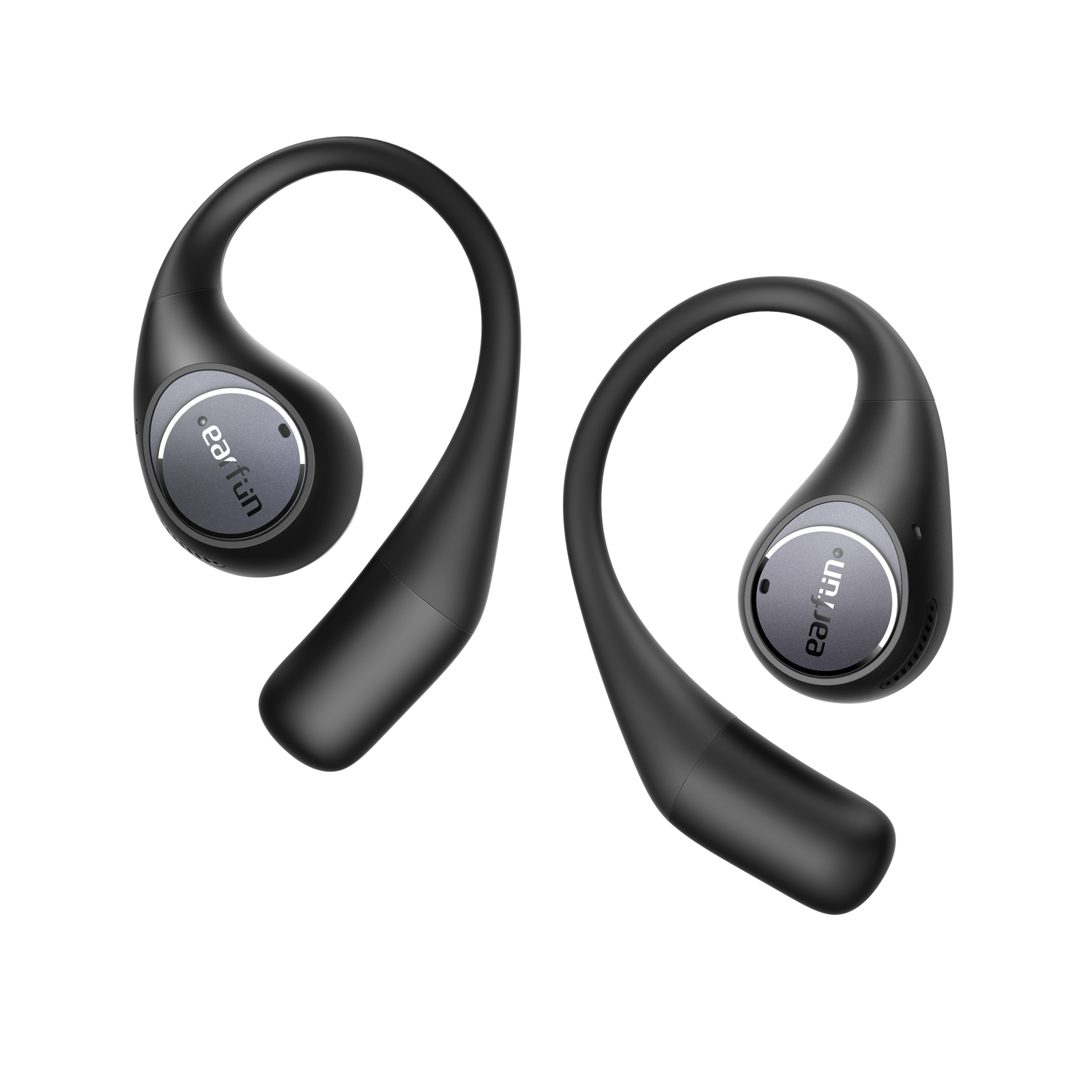
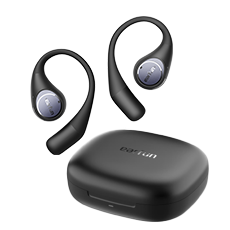
Settings can only recover so much — the driver and tuning underneath still set your ceiling. This is the part of the equation EarFun leans on hardest with the OpenJump, which pairs a 14.2mm wool composite driver — noticeably larger than what most open-ear earbuds pack in — with EarFun's exclusive BassSurge™ Bass Enhancement technology. BassSurge™ works by analyzing the audio signal in real time and selectively reinforcing low-end frequencies before they ever leave the driver, so the earbuds compensate for the bass an open design would normally lose instead of asking your EQ settings to make up the difference after the fact. It's the same problem this whole article is about, solved directly in the hardware.
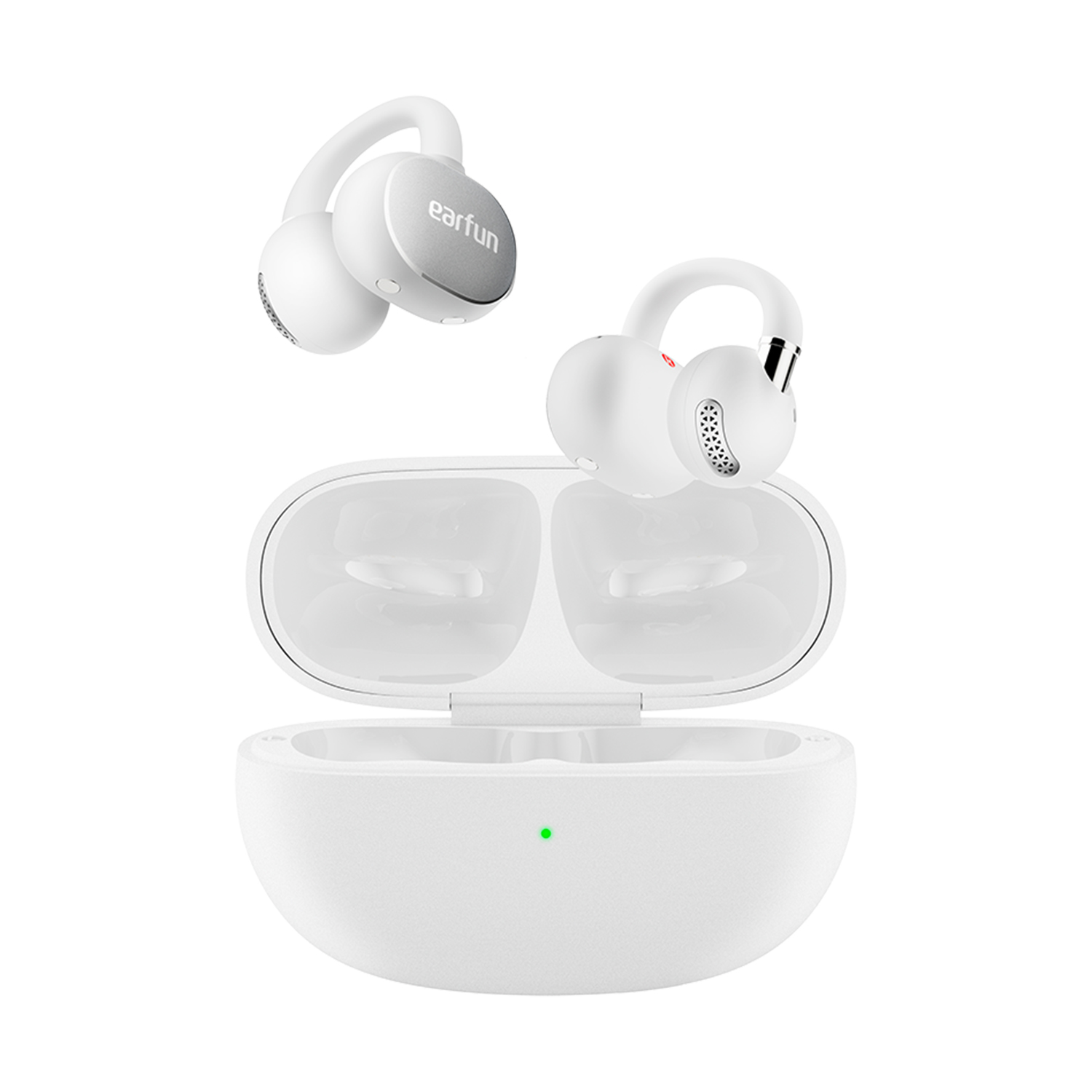
If your priority skews toward all-day comfort over maximum bass, the Clip 2 takes a lighter-touch approach — its open-ring clip keeps things minimal, and it still carries EarFun's exclusive BassSurge™ Bass Enhancement technology alongside Hi-Res audio support with LDAC, so you get the same low-end reinforcement in a smaller, lighter form factor with plenty of headroom to compensate further through EQ if you want it punchier.
The takeaway
An open-ear earbud that sounds a little thin out of the box isn't a lost cause — it's an earbud you haven't finished setting up yet. Reposition first, dial in the EQ second, check your phone's volume limits third, and keep the ports clean as routine maintenance. Do all four, and most people find the "quiet" complaint disappears entirely — no new pair of earbuds required.